Department of Economics
Economics Alumni Spotlight
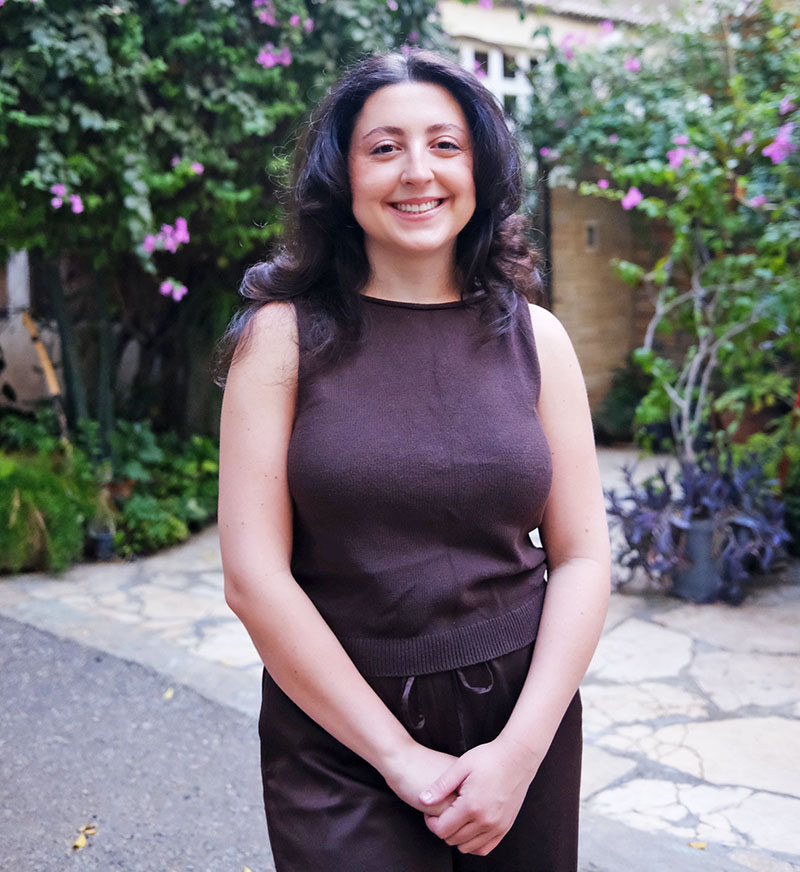
Nigma Shook, Class of 2019
1. What is your current position and how did you get there?
I’m currently a Principal Budget Analyst with the City of Fresno. My journey started at the County of Fresno, where I landed my first role as a Staff Analyst right after finishing my master’s program — during the height of the COVID-19 pandemic. It was a tough time to be job hunting; lots of economic uncertainty, hiring freezes and layoffs. Knowing that I wanted to find greater stability, I focused on opportunities in the public sector, and thankfully, that decision paid off.
With limited work experience, I leaned into what I did have — my academic background and the skills I built through group projects and classwork. I made sure to highlight things like working with diverse teams, meeting deadlines and delivering results as requested, skills applicable in a workplace environment. I was honest about what I didn’t know yet, and I showed that I was eager to learn and ready to adapt. That mindset helped me stand out, and it’s something I still carry with me today.
2. How has your econ background helped you in your career?
Economics is often misunderstood. People tend to think it’s all about money, banking or investing. But really, economics is about how we make decisions when resources are limited — and that applies to just about everything.
In my work in public finance and budgeting, I use economics every day. Whether it’s analyzing how to allocate limited funds and the impact of opportunity cost, forecasting costs or evaluating whether we’re recovering the full cost of providing services, economic thinking is at the core of what I do. Back when I was a Staff Analyst, I also used my econ training to evaluate performance and output metrics and understand how fiscal policy affected different communities. Economics gives you a powerful lens to look at problems and find smart, equitable solutions.
3. What advice do you have for current students?
Don’t shy away from the math — embrace it. Take courses like econometrics, statistics, calculus and linear algebra. Economics is becoming more and more quantitative, and having a strong mathematical foundation will open up so many doors, whether you’re headed into policy, research, finance or grad school.
Understanding the math behind economic models helps you see how systems work, make better decisions and stand out in competitive fields. If you’re serious about economics, building those skills now will give you a huge advantage later. And if you’re thinking about grad school, trust me — those math courses will be your best friend, and you will not regret earning that additional degree.
4. Favorite memory from Fresno State?
Some of my favorite memories are the simple ones — hanging out with classmates between classes, working on group projects in the library, or chatting in the lower-level pit of the Peters Building. Those moments of connection and collaboration made my time at Fresno State special.
5. Is there a course or professor that had a lasting impact on you?
I really enjoyed taking courses with Professor Capehart. His classes were a refreshing change from the traditional micro and macroeconomics curriculum. He taught History of Economic Thought and Contemporary Socioeconomic Challenges, and both offered a broader, more philosophical perspective on economics. They encouraged us to think outside the box, explore how economic ideas have evolved and how they apply to real-world issues today. Given how math-heavy economics can be, I’d definitely recommend these kinds of courses to help broaden your horizons and deepen your understanding of the field beyond the numbers.
6. If you could go back, is there anything you would do differently during your time in college?
If I could go back, I’d make more of an effort to get involved outside the classroom — whether that meant working at the tutoring center, joining a research project or volunteering as a research assistant. My advice to current students is to reach out to your professors and ask if they know of any opportunities within the department. I didn’t do that enough during my time at Fresno State, and looking back, I wish I had taken advantage of those chances to contribute and learn more.
7. What’s one piece of advice you’d give about building a professional network while still in school?
Stay engaged and build relationships early. Participate in class discussions, embrace group projects and make an effort to connect with your classmates. Even if you don’t stay in touch with everyone, some of those connections will stick around long after graduation — and they can be incredibly valuable. Reach out from time to time, grab lunch or just check in. You never know what someone might be able to offer you — whether it’s a job lead, mentorship, or simply good advice. Networking doesn’t have to be formal; sometimes it’s just about being present and staying connected.
Read more Economics Alumni Spotlights in the archive